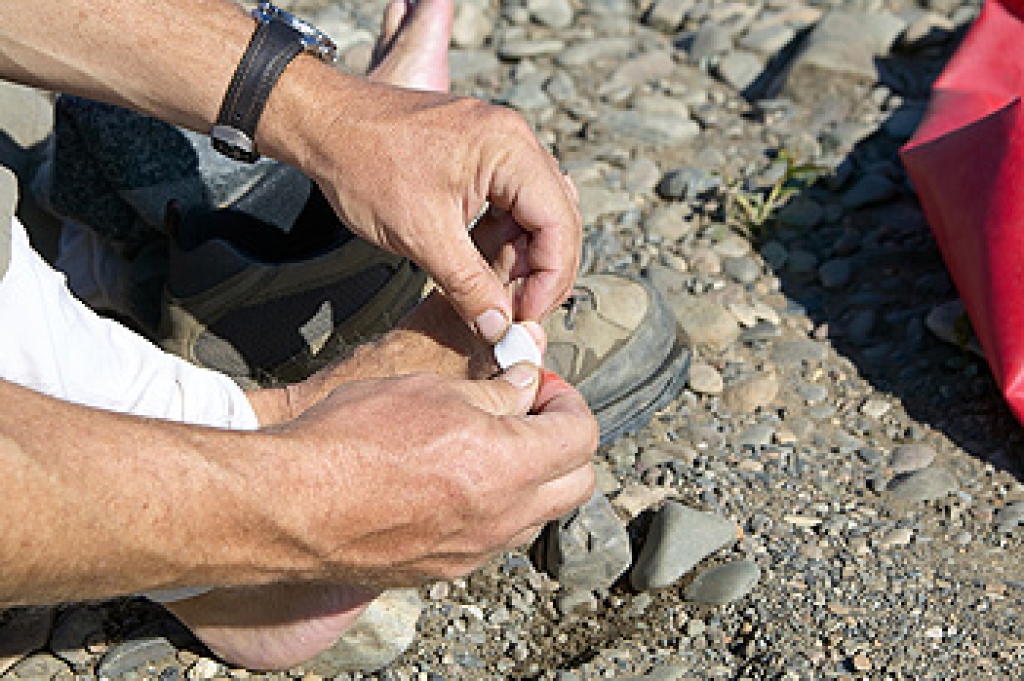
When the outer layer of skin is separated from the layer below it, the space fills with fluid to form a blister. They typically form as a result of rubbing the foot against the inside of a shoe and are a common occurrence among athletes and runners. A blister may go away on its own with a few simple precautions. Remove the offending footwear, cover the blister with a clean bandage, and keep the area clean. The best way to treat blisters is to avoid them in the first place. Wear shoes that fit properly, making sure you can wiggle your toes within them and that your heel does not rub on the back of the shoe when you walk or run. Wear acrylic socks that wick moisture instead of cotton socks that may bunch up inside the shoe. Apply powder to the feet and toes before embarking on a long run or other strenuous activity. Generally, blisters will go away on their own, but if a blister becomes red, swollen, or pus-filled, it is likely to be infected. In this case, please consult a chiropodist who can properly drain the blister and offer other treatment options.
Blisters can usually be treated at home, however, if you have recurring blisters or experience significant discomfort or pain, please consult with one of the specialists from Thornhill Foot Clinic. Our chiropodists will assess your condition and provide you with quality foot and ankle treatment.
What Is a Blister?
A blister is a small pocket of fluid in the upper skin layers and is one of the body’s natural responses to injury or pressure. Blisters can also result from burns, fungal or viral skin infections, and the feet are particularly prone due to ill-fitting footwear and friction. Friction on the skin causes the upper layer of skin to separate from the lower layers. The space that this separation creates then becomes filled with a liquid called serum, which protects the lower layers of skin.
Treatment
If you notice a blister on your foot, you can cover it with a soft bandage or dressing to protect it. Popping the blister is discouraged. Doing so exposes the raw skin underneath it to bacteria and also raises the risk of infection. If a blister pops naturally, let it drain before covering it with a bandage. Blisters usually heal on their own or with home treatment, however, if your blister is recurring, very painful, or appears infected, it is recommended that you see a chiropodist for treatment.
Prevention
You can help to prevent blisters by wearing comfortable, well-fitted shoes. Keep your feet dry by wearing moisture-wicking socks and dust your feet with talcum powder if they tend to get sweaty. If you have areas on your feet that are more susceptible to blisters, you might be able to prevent the blister from forming by covering it with a pad.
If you have any questions please feel free to contact our office located in Vaughan, ON .
