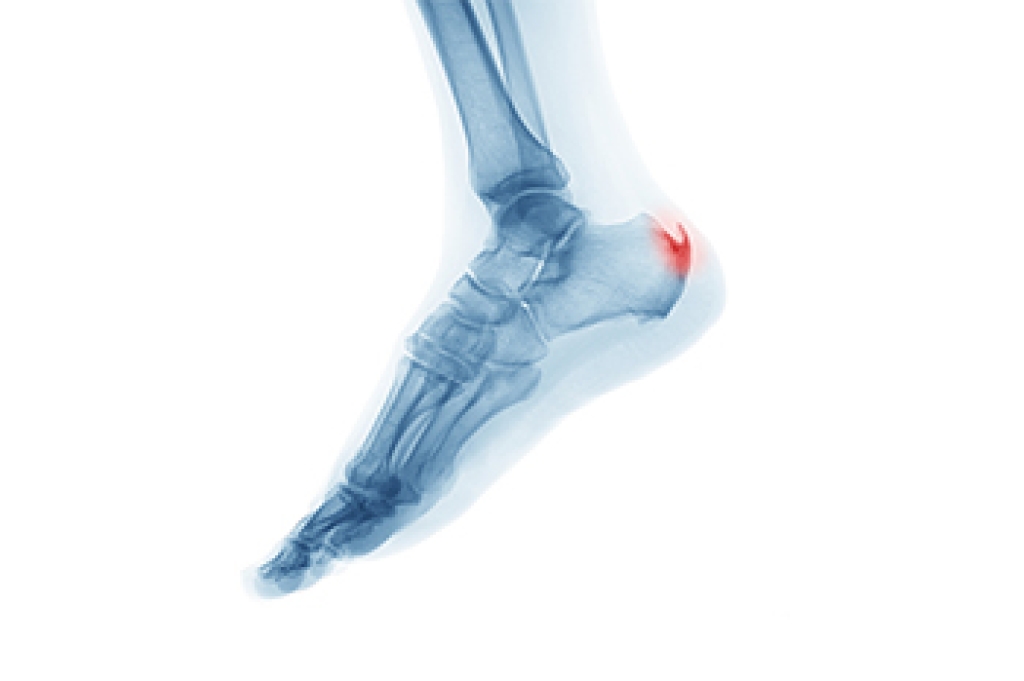
 Heel spurs are bony growths made from calcium deposits under the heel bone or at the back of the heel. They are frequently associated with plantar fasciitis, an inflammation of the ligament that runs along the bottom of the foot. On their own, heel spurs typically don’t cause any symptoms. They are usually found incidentally during an X-ray done for other purposes. When heel spurs are symptomatic, they cause heel pain, particularly while walking or running and when taking the first few steps in the morning or after resting for a period of time. Heel spurs that cause pain respond well to conservative treatments like resting and icing the foot and wearing more comfortable shoes. For more information about heel spurs, please consult with a chiropodist.
Heel spurs are bony outgrowths from calcium deposits. They occur at the back of the heel bone or underneath the heel bone and usually form in response to chronic irritation of the Achilles tendon or plantar fascia. They are often asymptomatic, but if you are suffering from heel pain, please consult with one of the specialists from Thornhill Foot Clinic. Our chiropodists can help you maintain the health of your lower limbs and your mobility.
Symptoms of Heel Spurs
- Tenderness
- Heel pain
- Pain when walking
- No symptoms
Diagnosis
Since heel spurs are often asymptomatic, they are usually only diagnosed when they are found on the heels incidentally during an X-ray taken for another reason. Nevertheless, if you have heel pain, and particularly if you have plantar fasciitis or Achilles tendonitis, it may be worth it to see if you have heel spurs too.
Treatment
Unless they are causing symptoms, heel spurs typically don’t require any treatment. When they are symptomatic, treatments are typically conservative. They may include resting and icing the affected foot, taking anti-inflammatory medications, and wearing orthotics or supportive footwear, especially while exercising.
If you have any questions please feel free to contact our office located in Vaughan, ON .
