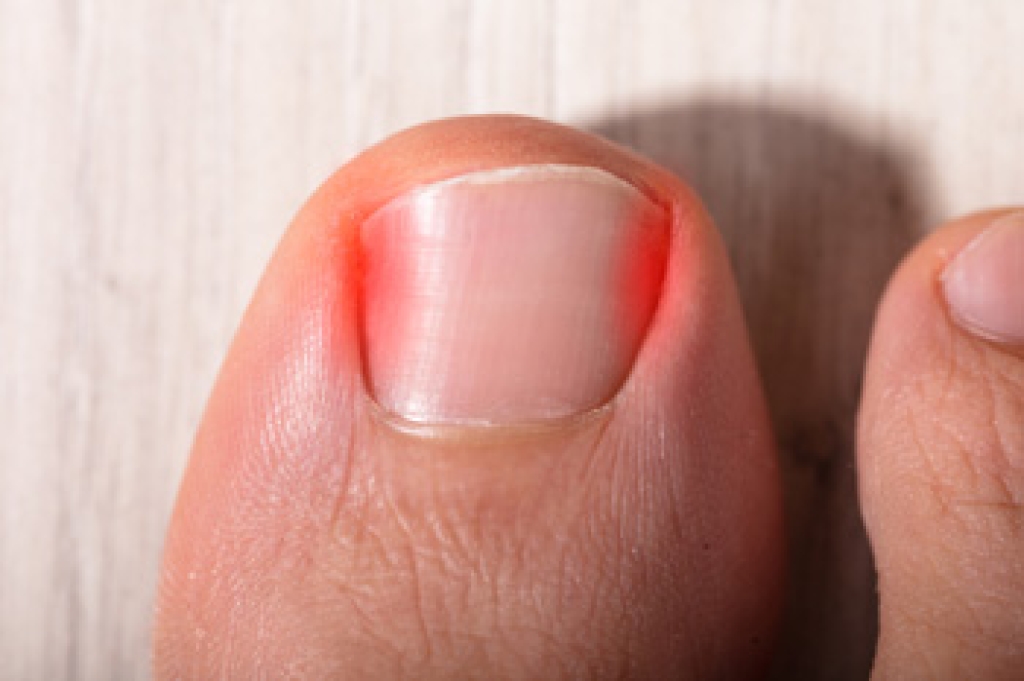
Ingrown toenails are common and painful, usually the result of clipping toenails incorrectly. This causes the nail to become embedded in the surrounding soft skin or the skin to grow over the top of the nail. Cutting toenails straight across is recommended, rather than having the corners of the nail rounded. Wearing shoes that are too tight in the toe box can encourage an ingrown toenail to form. Other deformities or abnormalities, such as bunions, hammertoes, and overpronation may be risk factors as they can affect gait and posture. An ingrown toenail appears red, swollen, and painful to touch. If ignored, an ingrown toenail can become infected, sometimes resulting in a discharge of pus. Ingrown toenails can be treated non-surgically if tended to immediately. Taking extreme corrective measures into your own hands is not recommended, as they can cause further problems. For instance, cutting the toenail shorter increases the likelihood of it growing more deeply into the nail bed. For safe and sterile treatment options, it is suggested you contact a chiropodist as soon as possible.
Ingrown toenails may require medical attention. If you have significant pain or notice signs of infection from an ingrown toenail, please consult with one of the specialists from Thornhill Foot Clinic. Our chiropodists will assess your condition and provide you with quality foot and ankle treatment.
What Is an Ingrown Toenail?
An ingrown toenail occurs when the edges of a toenail grow into the surrounding skin. The toenails of the big toe are usually affected, however, an ingrown toenail can happen on any toe. Sometimes, the area can become infected leading to potentially serious complications. The ingrown toenail may be caused by improper trimming of the toenail, wearing ill-fitting shoes, or injury to the nail.
Symptoms
The symptoms of an ingrown toenail include:
- Pain
- Swelling
- Redness
- Warmth
- Pus or drainage from the affected nail or a fever may indicate an infection of the area.
Treatment
Treatment depends on the severity of the ingrown toenail. In less severe cases, home treatment may be adequate. Soaking the affected foot in warm water and gently lifting the nail from the skin with a piece of clean cotton can help. In more severe cases, you may need to use topical or oral antibiotics to treat an infection. Surgical removal of the ingrown toenail may be required if more conservative treatments fail.
Ingrown toenails may be prevented by wearing well-fitted shoes and properly trimming the toenails. Toenails should be trimmed straight across and not too short when using nail clippers.
If you have any questions please feel free to contact our office located in Vaughan, ON .
