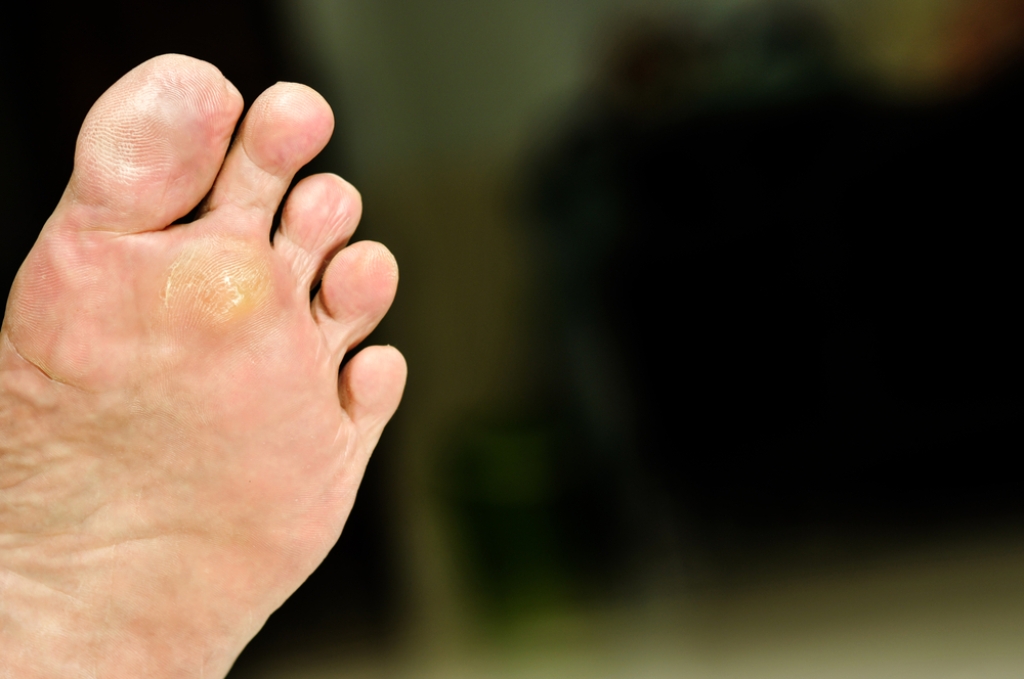
Plantar warts are rough skin growths that develop on the soles of the feet. They are caused by strains of the human papillomavirus, or HPV. The virus enters through breaks in the skin and spreads through direct contact or shared surfaces. Warm, damp places like pools, showers, and changing rooms can increase exposure. A wart can appear anywhere on the sole, but the heel and ball of the foot are frequent sites because they bear weight.
A plantar wart can look grainy, firm, or fleshy. Small black dots can appear inside it because tiny blood vessels feed the growth. The wart can also interrupt the natural lines of the skin. Pressure can push it inward and create a layer of hard skin above it. Pain can occur when standing, when walking, or when the sides of the growth are squeezed. Several nearby warts can join in a cluster called a mosaic wart. Since corns and calluses can look similar, an accurate assessment is important.
A chiropodist can examine the area and confirm whether the growth is a plantar wart. The assessment considers its appearance, location, and response to gentle pressure. After diagnosis, the chiropodist can recommend an in-clinic treatment based on the wart and your health. Options include controlled freezing and professional chemical applications. The chiropodist can also reduce thick skin covering the wart, monitor healing, and adjust care at follow-up visits. Prompt treatment can ease pain and lower the chance of the virus spreading to nearby skin or other people. Keeping feet clean and dry also supports foot health. Wear sandals in shared wet areas, and avoid sharing shoes or socks. If you have symptoms of a plantar wart, it is suggested that you schedule an appointment with a chiropodist for a diagnosis and appropriate treatment.
Plantar warts can be uncomfortable or even painful. If you’re suffering from warts on your feet, please consult with one of the specialists from Thornhill Foot Clinic. Our chiropodists can help you maintain the health of your lower limbs and your mobility.
What Does a Plantar Wart Look Like?
Plantar warts are fleshy growths that generally have a rough, grainy texture. They may look and feel like a callus and are usually small and can grow individually or in clusters. Plantar warts may have small, black dots at their center that are actually tiny blood vessels. Warts interrupt the natural lines of your skin.
Treatment Options
- Salicylic acid - A chemical solution applied directly to the wart
- Cryotherapy - Freezing the wart off with liquid nitrogen
- Minor surgery - Removing the wart through excision
- Laser treatment - A concentrated beam of light is used to remove the wart
- Wearing comfortable shoes and socks to avoid irritating the wart
- Over-the-counter medications for pain relief
- Patches to keep pressure off the warts
Plantar warts can go away on their own, but this may take several months to years. If your plantar warts are bothering you, seeking medical treatment is suggested. If you have any questions please feel free to contact our office located in Vaughan, ON .
