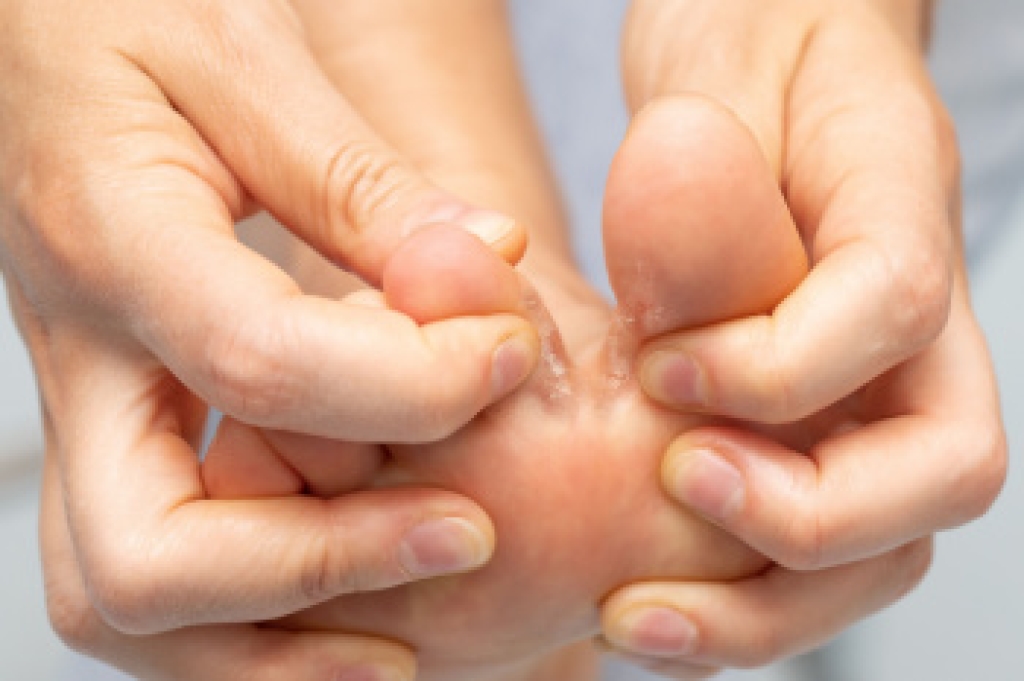
Athlete’s foot is a fungal infection that affects the skin between the toes. It grows in warm, damp places, including locker rooms, showers, and pool areas. Symptoms include intense itching, cracked skin, and peeling. Redness or scaling can also develop on the soles, while infections can spread to the toenails. A chiropodist can examine the feet and determine whether athlete’s foot or another skin problem is causing the symptoms. The examination can include taking a skin sample for study. After confirming the infection, the chiropodist can provide professional treatment and monitor how the skin responds. The chiropodist can also identify factors that encourage repeated infections, including sweaty feet, damp shoes, and shared floors. Patients with diabetes should seek care because foot infections can become more serious. If you have symptoms of an athlete's foot infection, it is suggested that you schedule an appointment with a chiropodist for a diagnosis and appropriate treatment.
Athlete’s foot can be uncomfortable and unsightly. To learn more about preventing and treating this condition, please consult with one of the specialists from Thornhill Foot Clinic. Our chiropodists will assess your condition and provide you with quality foot and ankle treatment.
What Is Athlete’s Foot?
Athlete’s foot refers to an infection of the skin on the feet that is caused by a fungus. This fungus is contagious and thrives in warm and moist environments. It is often spread in common areas such as public pools, locker rooms, and showers. It can also spread when sharing personal items, like shoes or towels, with an infected person.
Symptoms
The symptoms of athlete’s foot may include:
- Itching, stinging, or burning of the skin on the feet
- Cracking or peeling skin, especially between the toes and on the soles of the feet
- Scaly, red rash on the foot
- Blisters
- Foul odor
Treatment
Treatment for athlete’s foot typically involves using over-the-counter topical antifungal medications on the feet. When over-the-counter options are ineffective, you may need to take prescription oral medications or topical antifungal drugs, or a combination of both.
Prevention
Preventing athlete’s foot places an emphasis on good foot hygiene practices.
You can prevent athlete’s foot by:
- Washing and drying your feet thoroughly every day
- Wearing shoes when walking in public areas
- Not sharing personal items, like shoes or socks, with others
- Wearing shoes and socks made out of breathable materials
If you have any questions please feel free to contact our office located in Vaughan, ON .